-
Built for every day
The collection made to move with you
Layerable pieces designed to last, in colors that go anywhere.
-
Your next favorite
Fresh arrivals, ready to wear
Handpicked staples that work as hard as you do.


Spectral
Dress Long Toile Black
$20.79$25.99-20%
- Retouched photo
- Free shipping on orders over $50
- Free shipping on orders over $50 2
- Free shipping on orders over $50 3
Bundle & save
Shop the collection
Editor's picks, ready to add
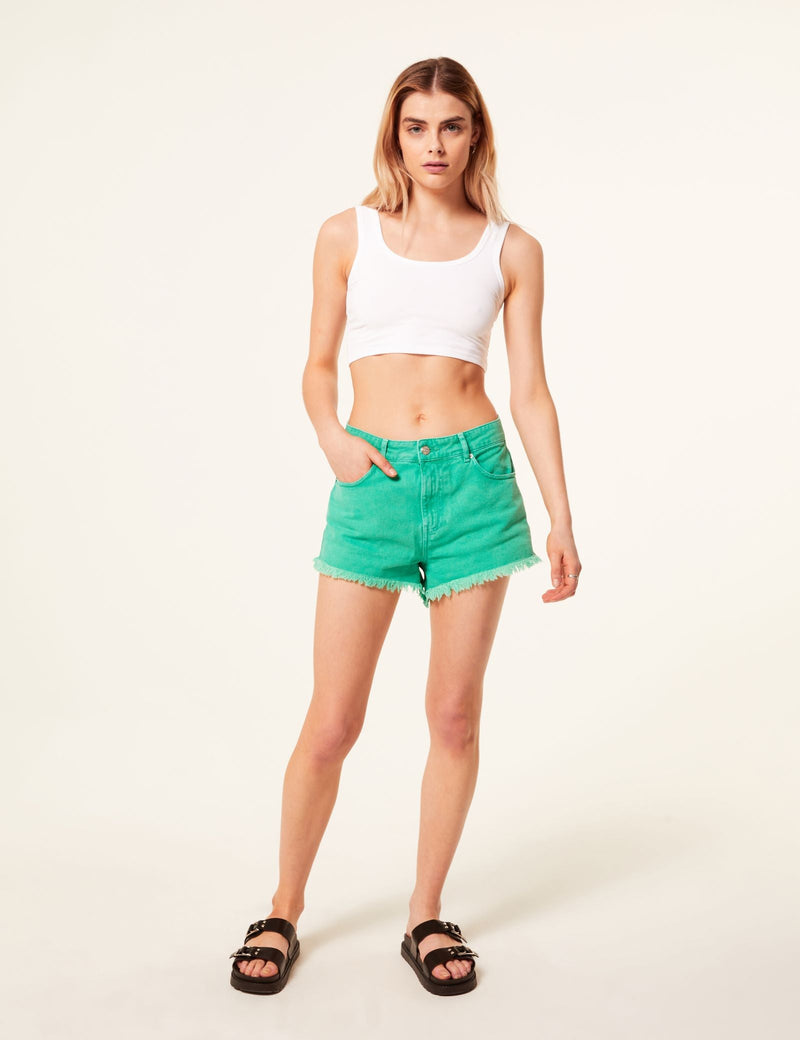
 New arrival
- New arrival 2
- New arrival 3
HOW IT WORKS
See it in motion, then make it yours
A short paragraph of supporting copy that sits beside the video. Keep it to a few sentences so the pane and the words stay balanced.
Learn moreSee the difference
Drag the slider to compare the results side by side.
BeforeAfterExplore the details
Select a marker to learn more about each part of the image.

New arrivals
The season's edit is here
Shop the pieces everyone is reaching for this month.
Shop the collectionReady to upgrade your routine? Start today
Free shipping on every order over $50, plus a 30-day money-back guarantee.
Featured gallery
Explore highlights from across the collection.
You may also like
Complete the set with these picks
Featured product
Everyday essentials, thoughtfully madeNow in stock
A considered collection built for daily use. Clean lines, honest materials, made to last.
Dress Long Toile Black
$20.79$25.99-20%
Why shop with us
Free shippingOn all orders over $50
Free shipping 2On all orders over $50 2
Free shipping 3On all orders over $50 3
Why it works
6 reasons customers keep coming back
A short introduction to the reasons below. Explain the payoff in a sentence or two so the list has context.
A reason worth switching for
One or two sentences that explain this reason and why it matters to the shopper.
Backed by real results
A reason worth switching for 2
One or two sentences that explain this reason and why it matters to the shopper. 2
Backed by real results 2
A reason worth switching for 3
One or two sentences that explain this reason and why it matters to the shopper. 3
Backed by real results 3
Ready to feel the difference?
Shop the collectionOur journey
Milestones that shaped us
A look at the moments that defined our story, from the first idea to where we are today.
Learn more2021
A milestone worth marking
A short description of what happened at this point in the story and why it mattered.
2021 2
A milestone worth marking 2
A short description of what happened at this point in the story and why it mattered. 2
2021 3
A milestone worth marking 3
A short description of what happened at this point in the story and why it mattered. 3
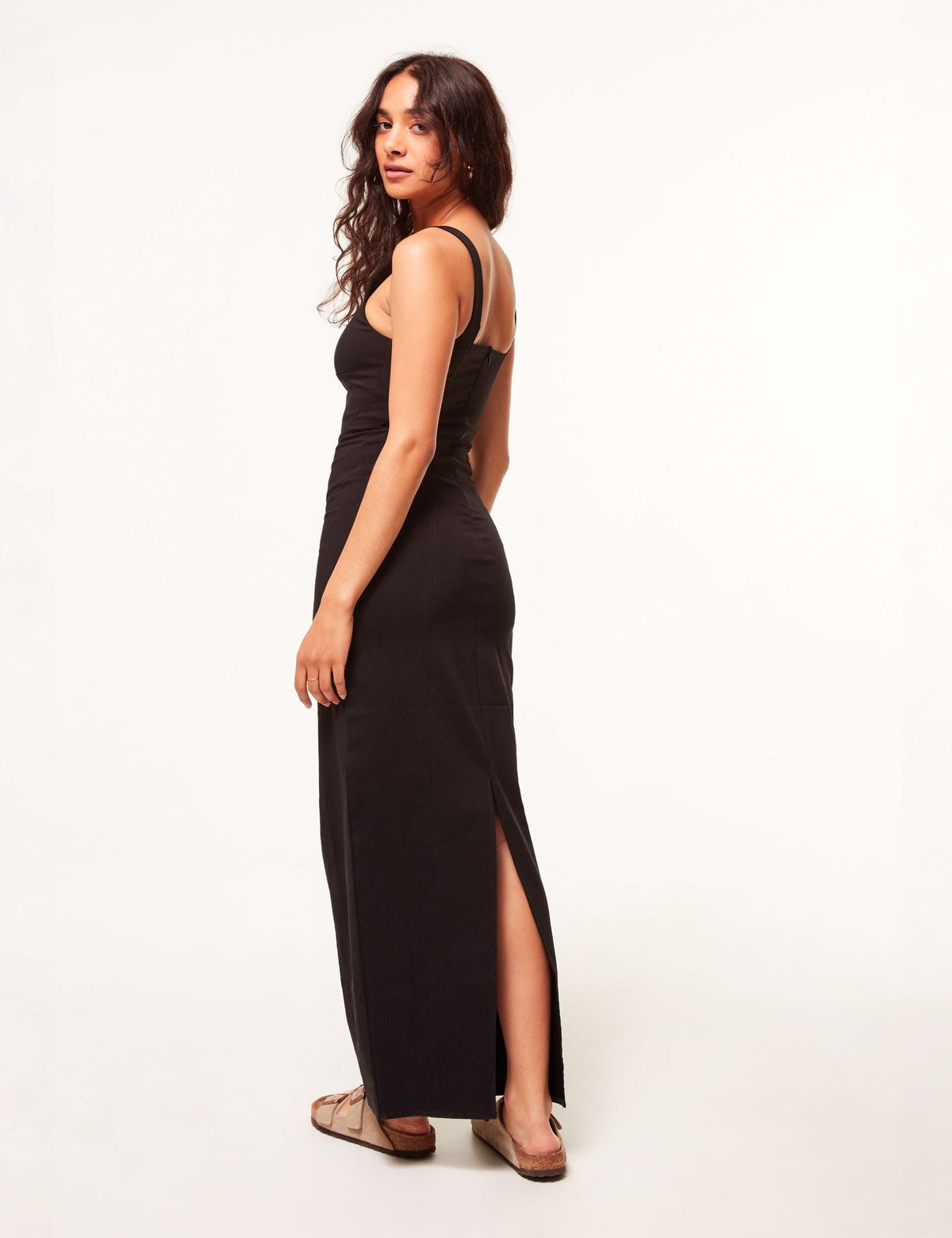
Editor's pick
Dress Long Toile Black
$20.79$25.99-20%
Crafted for everyday use and built to last, this piece brings considered design to your daily routine.
Free shipping on every order
Free shipping on every order 2
Free shipping on every order 3
What our customers say
Real feedback from people who use our products every day.
This has genuinely made a difference in my daily routine — I noticed results within the first two weeks.
This has genuinely made a difference in my daily routine — I noticed results within the first two weeks. 2
This has genuinely made a difference in my daily routine — I noticed results within the first two weeks. 3
Pricing
Simple, transparent pricing
Choose the plan that fits your team — no hidden fees, cancel anytime.
Starter
$19/mo
For individuals getting started
Single user
Community support
1GB storage space
Most popularGet started 2
Starter 2
$19 2/mo 2
For individuals getting started 2
Single user
Community support
1GB storage space 2
Starter 3
$19 3/mo 3
For individuals getting started 3
Single user
Community support
1GB storage space 3
Blog
From the journal
Tips, stories, and product news from our team.
Blog title heading will go here
A short summary of the article that gives readers a preview of what's inside.
Read more
Blog title heading will go here 2
A short summary of the article that gives readers a preview of what's inside. 2
Read more
Blog title heading will go here 3
A short summary of the article that gives readers a preview of what's inside. 3
Read more
A note from our founder
Why we started
When I couldn't find a product I actually trusted, I decided to build one myself. Every detail you see here started at a kitchen table, tested by the people I care about most.
We still make every decision the same way: would we be proud to give this to our own family? If the answer is ever no, we go back to work. Thank you for being part of the story.
Alex Rivers
Founder & CEO
Customer story
How Northwind cut fulfilment time in half
Facing a backlog every peak season, the team rebuilt their workflow around one system. Within a quarter the numbers spoke for themselves and the story became their best sales pitch.
We shipped faster with fewer people and never looked back.
Jordan AveryHead of Operations, Northwind
+38%conversion rate
+38% 2conversion rate 2
+38% 3conversion rate 3
About
Northform
I'm Ava Larkin. I started Northform in 2026 out of a converted pattern studio in Providence, Rhode Island.
Before this, I drafted patterns for COS and Theory. I spent ten years watching well-fabricked clothes get ruined by lazy patterning. $400 cashmere sweaters that fell apart at the shoulder seam because the brand had cut corners on the armhole curve. $40 t-shirts from a Portuguese mill that sat beautifully because someone had spent an extra hour on the neckline.
The pattern-making craft is invisible until it's done badly. When it's done well, you notice that one shirt doesn't pull when you reach for a coffee cup. When it's done badly, you spend twenty minutes a day adjusting whichever piece you put on.
Northform was started to invert the standard order: pattern first, fabric second, marketing last. Every Northform piece starts with a fit block, which is the master pattern, and the block is tested on six body types before a single yard of fabric is cut. My bet is that women buy basics over and over because the basics they have don't fit. If I can get fit right, the rest follows.
Where we make things
We don't own factories. We work with four of them.
Têxtil Vale do Ave sits outside Porto. They knit our sweaters, weave our shirting cloth, and run the cotton-linen blends for transitional pieces. They've been at this for three generations; the shoulder fashioning on a Wool Crew Sweater is done on a machine their grandfather bought.
Casa Bandeira in Lisbon makes our tailoring. Half-canvas blazers, single-pleat trousers, the trench. They finish jackets for two well-known European houses and have agreed to take our small runs on the same machines.
Curtumes Alcanena vegetable-tans the leather for our tote and belt. The town of Alcanena has been a Portuguese tannery hub since the 1700s. Vegetable tanning takes three weeks (chrome tanning takes a day). It's the construction reason a Northform leather piece changes color over years instead of cracking.
Algodonera del Norte in northern Peru grows and spins the Supima cotton for the entire Tee Program. Tee Program cotton is the only thing we source outside of Portugal, because Peruvian Supima is structurally better than anything we could find closer to home.
Setas do Porto is a small silk mill that weaves the cloth for our scarves and silk blouses.
The names of every maker sit on the relevant product page. You can look them up on a map.
What we make
Eight product pillars. About forty pieces total. Three weights of tee, five knits, five shirts, six bottoms, four tailoring pieces, four coats, five dresses, four accessories.
There are no seasonal drops. We add pieces when the pattern is ready, not when a calendar tells us to. If a customer buys a Mid-Weight Crew in March, the same crew is on the site in October, in the same colors, at the same price, with the same fit.
What we don't do
We don't put a logo on anything. We don't run sales. We don't do influencer seeding, runway shows, or "limited drops". We don't make trend pieces, statement pieces, or pieces designed to photograph well on Instagram. We don't make anything in a fabric we wouldn't wear ourselves for five years.
If that sounds austere, it isn't meant to. It's meant to be sustainable in the most boring sense of the word: the brand should be here in 2036, in the same colors, with the same shoulder block, and the customer who bought a Mid-Weight Crew in 2026 should still be able to buy the same one in the same size.
Ava.
P.S. Want to write to us? Hello at northform dot studio. We read every note.
ON A GLP-1? START HERE
Your GLP-1 Is Working. It's Your Nutrition not keeping up.
LyfeFuel delivers 18g protein + 27 vitamins & minerals in one scoop — formulated to protect muscle, hair, and energy while your appetite is suppressed.
$79$60$2.50/MEAL · SAVE 14%
Free shipping · Pause or skip anytime · 30-day empty-bag guarantee.
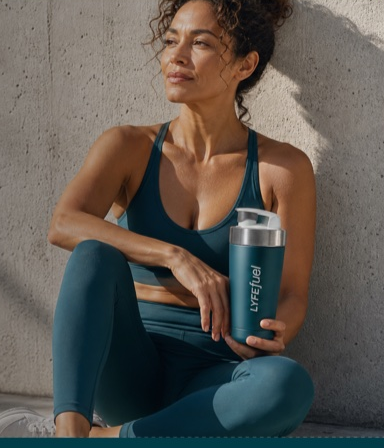
Trusted by 1,200+ Clinicians
3rd-Party Tested
Bioactive Ingredients
Evidence-Based Formulations

01 — THE TOLERANCE TEST
It won't sit like a brick.
The #1 reason GLP-1 patients quit their shake isn't taste — it's that whey sits like cement on a stomach that's barely moving. LyfeFuel is 100% plant-based: pea, sprouted brown rice, real superfoods. No whey, no dairy, no isolates. It goes down light, even on the rough days.
I was terrified to try another shake on Mounjaro. This one actually stays down — even on my dose-up days.
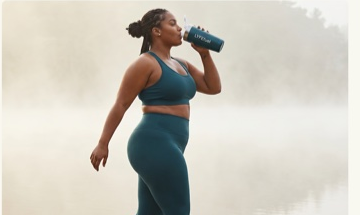
02 — THE MUSCLE QUESTION
You're losing weight. Make sure it's not muscle.
On a GLP-1, up to a third of the weight you lose can be lean muscle, not fat. 18g of complete plant protein per scoop gives your body what it needs to hold onto muscle while the medication does the rest.
My doctor said my muscle mass held steady for 6 months on Wegovy. She asked what I was doing differently. It’s LyfeFuel.

03 — THE DOCTOR CONVERSATION
At your next appointment, you'll have the answer.
Every GLP-1 follow-up comes with the same question: are you getting enough protein and nutrients? When you're eating 800 calories instead of 2,000, the answer is usually no. LyfeFuel covers the amino acids and 27 essential vitamins and minerals a suppressed appetite leaves out.
THE COST BREAKDOWN
All Your Essentials in One
Made to simplify your supplements — $2.91/day vs $7.84 buying them separately.
Protein Powder $2.00 / serving
Complete plant protein with all the amino acids needed to preserve lean muscle.
Replaces a standalone protein powder.
Multivitamin & Mineral $1.50 / serving
27 essential vitamins and minerals from Food-Grown® whole-food sources.
Replaces a daily multivitamin.
Pre & Probiotic $1.00 / serving
Digestive support that keeps the shake gentle — even on dose-up days.
Replaces a standalone probiotic.
Greens & Superfood $1.67 / serving
Daily greens blend without the extra scoop, tub, or taste compromise.
Replaces a greens powder.
Vitamin D3 + K2 $0.67 / serving
Bone and immune support in the clinically studied D3+K2 pairing.
Replaces a D3/K2 supplement.
Cognitive Support $1.00 / serving
B-12 and magnesium reserves for the 2pm energy crash.
Replaces a nootropic stack.
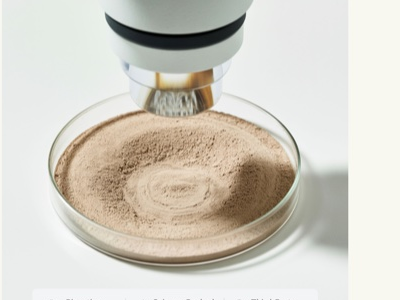
04 — THE SIDE-EFFECT FIX
Hair loss, energy crashes, bloodwork flags.
The side effects nobody warns you about are from the nutrients you stopped eating, not the medication. Hair thinning, 2pm crashes, low bloodwork markers — LyfeFuel replaces all of it in a single daily scoop from sources your body actually absorbs.
05 — THE TRANSPARENCY TEST
Read the actual lab report. We publish it.
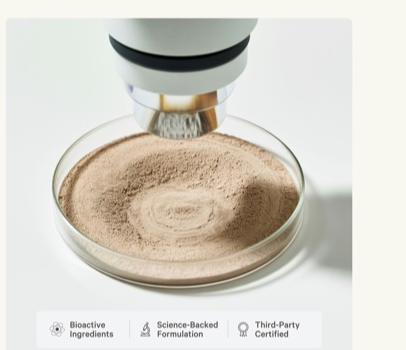
Most “premium” brands show you a certification badge and call it transparency. We show you the lab results — for the exact batch in your hands.
Every batch is tested by an independent lab for heavy metals, pesticides, and contaminants. Then we publish the report. Named lab, real numbers, dated by batch. You can read it before you open the tub — because the medication you're already on is enough of a leap of faith. The nutrition supporting it shouldn't be.
Every batch is tested by an independent lab for heavy metals, pesticides, and contaminants. Then we publish the report. Named lab, real numbers, dated by batch. You can read it before you open the tub — because the medication you're already on is enough of a leap of faith. The nutrition supporting it shouldn't be.
Other products only give you 20% of what your body needs and call it complete. LyfeFuel delivers the other 80%.

07 — THE FOUNDER STORY
He stopped trusting the label too.
LyfeFuel started with one question its founder couldn't shake: where do the ingredients in supplements actually come from?
The answer shocked him — even “premium” brands use synthetic vitamins from petrochemicals, the kind your body can't fully absorb. As a bariatric clinician, Chris Manderino had already watched weight-loss patients lose muscle when their nutrition fell short — your exact problem, a decade before GLP-1s existed.
So he built the answer: real food, dense enough that your body gets what it needs even when you're barely eating. No celebrity. No outside formulator. Just the shake he'd want his own patients drinking.
“I didn't set out to build a supplement company. I set out to find an honest answer to one question — and LyfeFuel is what I found.”
— Chris Manderino, Founder & CEO
The answer shocked him — even “premium” brands use synthetic vitamins from petrochemicals, the kind your body can't fully absorb. As a bariatric clinician, Chris Manderino had already watched weight-loss patients lose muscle when their nutrition fell short — your exact problem, a decade before GLP-1s existed.
So he built the answer: real food, dense enough that your body gets what it needs even when you're barely eating. No celebrity. No outside formulator. Just the shake he'd want his own patients drinking.
“I didn't set out to build a supplement company. I set out to find an honest answer to one question — and LyfeFuel is what I found.”
— Chris Manderino, Founder & CEO
08 — THE LONG GAME
The one thing you don't stop, when the medication does.
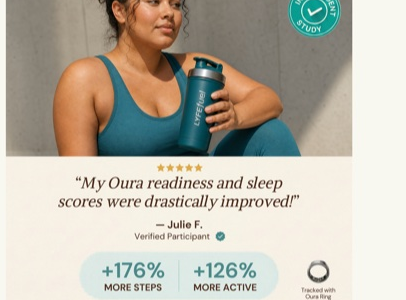
The hardest part of a GLP-1 isn't the weight coming off. It's what happens when you stop.
The appetite comes back. The protein need doesn't. The muscle you protected is what keeps the weight off, and the nutrition habit you built is what carries you through. LyfeFuel works the same whether you're titrating up, holding steady, or tapering off. It's not a phase of the journey. It's the part that outlasts it.
The appetite comes back. The protein need doesn't. The muscle you protected is what keeps the weight off, and the nutrition habit you built is what carries you through. LyfeFuel works the same whether you're titrating up, holding steady, or tapering off. It's not a phase of the journey. It's the part that outlasts it.
THE FORMULA
One scoop. Everything covered.
18gComplete protein
27+Vitamins & minerals
0gAdded sugar
THE LABEL-TRUST TEST
LyfeFuel vs. typical supplements
| LyfeFuel | Typical Supplements | |
|---|---|---|
| Food-Grown® whole-food nutrients | LyfeFuel | Typical Supplements |
| Bioavailability your body absorbs | LyfeFuel90%+ | Typical Supplements10–20% |
| Complete protein (18g) | LyfeFuel | Typical Supplements |
| Third-party lab reports published | LyfeFuel | Typical Supplements |
| No synthetic fillers | LyfeFuel | Typical SupplementsVaries |
After two years of daily shakes I took a break — and felt my body craving the nutrients it wasn't getting. I'm back on, and not stopping again.
90DAY MONEY-BACK GUARANTEE
Feel the difference, or it's free.
Try LyfeFuel for a full 90 days. If you don't feel sharper energy, better focus, and improved digestion, we'll refund every dollar — no return shipping, no questions, no fine print.
Start Your 90 DaysThe Clinical Trial said 95% felt more energy.
Reviews
Sort By
Got questions?
We have answers.
What makes LyfeFuel different from typical supplements?
Most supplements use synthetic, isolated nutrients with bioavailability rates of just 10–20%. LyfeFuel uses Food-Grown® nutrients — vitamins and minerals grown into actual whole foods — delivering 90%+ bioavailability so your cells can actually use what you're taking.
How long until I feel a difference?
Most people notice steadier energy within the first two weeks. Deeper markers — hair, nails, bloodwork — typically follow over 8–12 weeks of daily use, which is why we back every order with a 90-day guarantee.
Is the subscription flexible?
Yes. Pause, skip a month, or cancel anytime from your account — no calls, no lock-in. Membership keeps the 21% discount and free welcome gifts on your first order.
Where do you source ingredients?
From whole-food farms we audit, with every batch third-party lab tested. We publish the actual lab reports — not summaries — so you can check the numbers yourself.
What's your guarantee policy?
Feel the difference in 90 days, or it's free. If you don't feel noticeably better, we refund your order in full — no return shipping, no hoops.
Does it work alongside GLP-1 medication?
LyfeFuel was formulated for exactly that gap: when appetite is suppressed, it covers the protein and 27 essential vitamins and minerals your reduced intake no longer does. Always confirm supplements with your prescribing doctor.
Questions? Get instant replies!
$140$110SAVE 14% + FREE GIFTS
GET YOUR ESSENTIALSExclusive Bundle Offer · Essentials Nutrition Shake · 48 servings
Select a product in the section settings (Theme editor → this section → Product handle).